
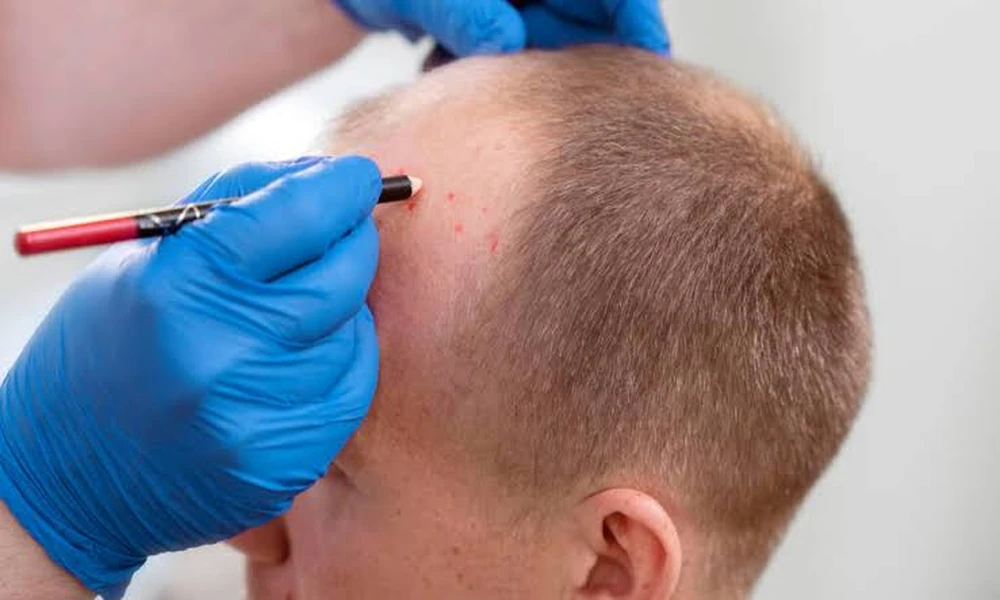
A patient lies face down on a padded table, watching a film on a tablet while a surgeon works on the back of his head. Every few seconds, one tiny group of hairs comes out. By late afternoon, a few thousand have been collected. That’s FUE in practice. Patients who search for a fue hair transplant clinic thailand usually want to understand this day before they book it. They also want to know what the months after it look like.
What the Letters Stand For
FUE means follicular unit extraction. Hair grows in small natural bunches of one to four hairs. Each bunch is called a follicular unit.
The surgeon removes these units one by one with a small round punch, usually less than one millimetre wide. Once removed, each unit is called a graft. The grafts are then planted into thinning areas.
Nothing is cut out in a strip, so there’s no long scar. The back of the head heals as hundreds of tiny dots that hair grows over.
Who Tends to Do Well With FUE
Good results start with a healthy donor area. Thick hair at the back and sides gives the surgeon more to work with.
Stable hair loss helps as well. A man of 22 may still be losing hair quickly, and his final pattern is hard to guess. Many doctors prefer to wait, or to start with medicine, in younger patients.
FUE also suits men who like very short hair at the back, because dot scars hide better than a line. Someone with thin, sparse donor hair may gain little from any transplant. An honest doctor will tell him so.
A well run fue hair transplant clinic thailand patients can rely on will give these rules on paper before surgery day. Patients who fly home soon after surgery find this especially useful.
The Slow Months After Surgery
Growth follows a rough timeline, though every patient is a little different.
- Days 10 to 14. Scabs fall off and redness starts to fade.
- Weeks 2 to 6. Most planted hairs shed. This is expected.
- Months 3 to 4. Thin new hairs begin to show.
- Months 6 to 8. Hair gets thicker and fuller.
- Month 12 and later. The final result becomes clear.
The shedding stage worries many patients. They see the new hairs fall out and think the surgery failed. The roots are still in place, and new hair grows from them.
Where the Method Falls Short
FUE has limits. Very large areas of baldness may need two sessions. Long days are tiring for the patient and the team.
Graft care matters a lot. A graft that dries out or gets squeezed may not grow. That’s why the skill of the team counts for more than the name of the method.
Some men also keep losing their original hair around the transplant. Medicine can slow that loss. Without it, the new hair may end up standing alone a few years later.
Patients who know the timeline in advance tend to stay calmer through the shedding months. They also tend to judge their result at the right time, around the one year mark.
